Table of Contents
Rakhal and M. were walking on the verandah to the east of Kāli Tapasvi’s room.Rakhal (earnestly): “M., let us practise sādhanā !
We have renounced home for good. When someone says, ‘You have not realized God by renouncing home; then why all this fuss?’, Narendra gives a good retort. He says, ‘Because we could not attain Ram, must we live with Shyam and beget children?’ Ah! Every now and then Narendra says nice things. You had better ask him.”
M: “What you say is right. I see that you too have become restless for God.”

M: “Yes, the Yogopanishad describes how Sukadeva fled this world of māyā. It also describes Vyāsa’s conversation with Suka. Vyāsa asked his son to practise religion in the world. But Suka said that the one essential thing is the Lotus Feet of God. He also expressed his disgust with worldly men for getting married and living with women.”
Many people think that it is enough not to look at the face of a woman. But what will you gain merely by turning your eyes to the ground at the sight of a woman?
Narendra put it very well last night, when he said:
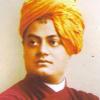
M: “How true it is! Children do not see the difference between man and woman.”
Rakhal: “Therefore I say that we must practise spiritual discipline. How can one attain Knowledge without going beyond māyā?
“Let’s go to the big hall. Some gentlemen have come from Baranagore. Narendra is talking with them. Let’s go and listen to him.” M. did not enter the room. As he was pacing outside he overheard some of the conversation.

Realization depends on God’s grace. Sri Krishna says in the Gitā: The Lord, O Arjuna, dwells in the hearts of all beings, causing them, by His māyā, to revolve as if mounted on a machine. Take refuge in Him with all thy heart, O Bharata. By His grace wilt thou attain Supreme Peace and the Eternal Abode.
Without the grace of God mere worship and prayer do not help at all. Therefore one should take refuge in Him.
It was dusk. The evening worship was over. The devotees, as usual, sang in chorus, “Jaya Śiva Omkara”. Afterwards they assembled in the room of the “Dānās”. M., too, was seated there. Prasanna was reading from the Guru Gitā. Narendra sang:
I salute the Eternal Teacher, who is the Embodiment of the Bliss of Brahman, The Essence of knowledge and liberation, the Giver of Supreme Joy;
Who is all-pervading, like the Ākāśa, and is the goal of the Vedānta’s teachings; Who is One, eternal, stainless, pure, and is the constant Witness of all things; Who dwells beyond all moods, transcending the three Gunās.
There is none, higher than the Guru, none better than the Guru; This is what Śiva has declared. I shall sing of the blessed Guru, the Supreme Brahman; I shall worship the blessed Guru, the Supreme Brahman; I shall meditate on the blessed Guru, the Supreme Brahman; I shall bow down to the blessed Guru, the Supreme Brahman.
As Narendra sang these verses from the Guru Gitā in his melodious voice, the minds of the devotees became steady, like a candle-flame in a windless place. Rakhal was seated in Kāli Tapasvi’s room.
Prasanna sat near him. M., too, was there.Rakhal had renounced the world, leaving behind his wife and child. A fire of intense renunciation burnt day and night in his heart. He was thinking seriously of going away, by himself, to the bank of the Narmada or some other holy place. Still, he was trying to persuade Prasanna not to run away from the monastery.
Prasanna: “My parents live in Calcutta. I am afraid of being drawn by their love: That is why I want to flee to a distant place.”

Tārak and Prasanna were talking in the room of the “Dānās”. Tārak had lost his mother. His father, like Rakhal’s father, had married a second time. Tārak himself had married but had lost his wife. Now the monastery was his home. He too was trying to persuade Prasanna to live there.

Leave a Comment
Thank you for your comment!
It will appear after review.