Table of Contents
Friday, April 9, 1886
IT was 5pm. Narendra, Kāli, Niranjan, and M. were talking downstairs in the Cossipore garden house.
NIRANJAN (to M.): “Is it true that Vidyāsāgar is going to open a new school? Why don’t you try to secure employment there for Naren?”
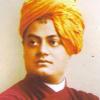
Narendra’s visit to Bodh-Gaya
Narendra had just returned from a visit to Bodh-Gaya, where he had gone with Kāli and Tārak. In that sacred place he had been absorbed in deep meditation before the image of Buddha. He had paid his respects to the Bodhi-tree, which is an offshoot of the original tree under which Buddha attained Nirvāna.
Kāli said, “One day at Gaya, at Mesh Babu’s house, Narendra sang many classical songs to the accompaniment of the Mridanga.”
Sri Ramakrishna sat on his bed in the big hall upstairs. It was evening. M. was alone in the room, fanning the Master. Lātu came in a little later.

M: “Yes, sir.”
(to Lātu): “The chaddar will cost ten ānnās , and then the slippers.
What will be the total cost?”
LĀTU: “One rupee and ten ānnās .”
Sri Ramakrishna asked M., by a sign, to note the price.
Narendra entered the room and took a seat. Śaśi, Rakhal, and one or two other devotees came in. The Master asked Narendra to stroke his feet. He also asked him whether he had taken his meal.
MASTER (smiling, to M.): “He went there [referring to Bodh-Gaya].”
Buddha’s doctrines
M. (to Narendra): “What are the doctrines of Buddha?“NARENDRA: “He could not express in words what he had realized by his tapasya . So people say he was an atheist.”
MASTER (by signs): “Why atheist? He was not an atheist. He simply could not express his inner experiences in words.
‘Buddha’ means to become one with Bodha, Pure Intelligence, by meditating on That which is of the nature of Pure Intelligence; it is to become Pure Intelligence Itself.”
MASTER: “This too is a sport of God Himself, a new lila of God.
“Why should Buddha be called an atheist? When one realizes Svarupa, the true nature of one’s Self, one attains a state that is something between Asti , is, and Nāsti , is not.”
This ’existence’ and ’non-existence’ are attributes of Prakriti. The Reality is beyond both.
(to Narendra): “What did Buddha preach?
Narendra’s enthusiasm about Buddha
Sri Ramakrishna remained silent. Narendra became more and more enthusiastic about Buddha.
Sri Ramakrishna was silent. As yet he had not uttered a word.
NARENDRA: “Buddha did not care for Śakti or any such thing. He sought only Nirvāna. Ah, how intense his dispassion was! When he sat down under the Bodhi-tree to meditate, he took this vow: ‘Let my body wither away here if I do not attain Nirvāna.’ Such a firm resolve!
“This body, indeed, is the great enemy. Can anything be achieved without chastising it?”
ŚAŚI: “But it is you who say that one develops sattva by eating meat. You insist that one should eat meat.”
NARENDRA: “I eat meat, no doubt, but I can also live on rice, mere rice, even without salt.”
After a few minutes Sri Ramakrishna broke his silence. He asked Narendra, by sign, whether he had seen a tuft of hair on Buddha’s head.
MASTER: “And his eyes?”
NARENDRA: “They show that he is in samādhi.”
Master about himself
Sri Ramakrishna again became silent. Narendra and the other devotees looked at him intently. Suddenly a smile lighted his face and he began to talk with Narendra. M. was fanning him.
M. (to himself): “Yes, after realizing all those ideals, he is now living as a bhakta, a devotee of God.“MASTER: “Someone seems to be holding me to a lower plane.”
Leave a Comment
Thank you for your comment!
It will appear after review.